
GenAI has enabled machines to transition from being tools to being teammates. This is a big shift that comes with a potential dark side. The C-suite expects CIOs to lead the organization’s AI strategy to capitalize on the benefits of AI while avoiding the risks.
The stakes are high, given the combination of AI excitement and disillusionment that exists in every organization — disillusionment, because the majority of AI projects have failed to deploy as projected.
Gartner research finds that between 17% and 25% of organizations have said they planned to deploy AI within the next 12 months every year from 2019 to 2024, yet the annual growth of production deployments was only 2% to 5%.
To help increase the success rate, CIOs should start by helping set the organization’s AI ambition — that is, decide where and how you will use AI in the organization. Given that today’s AI can do everything, including decide, take action, discover and generate, it’s as important to know what you will not do.
An AI plan must take account of three key elements:
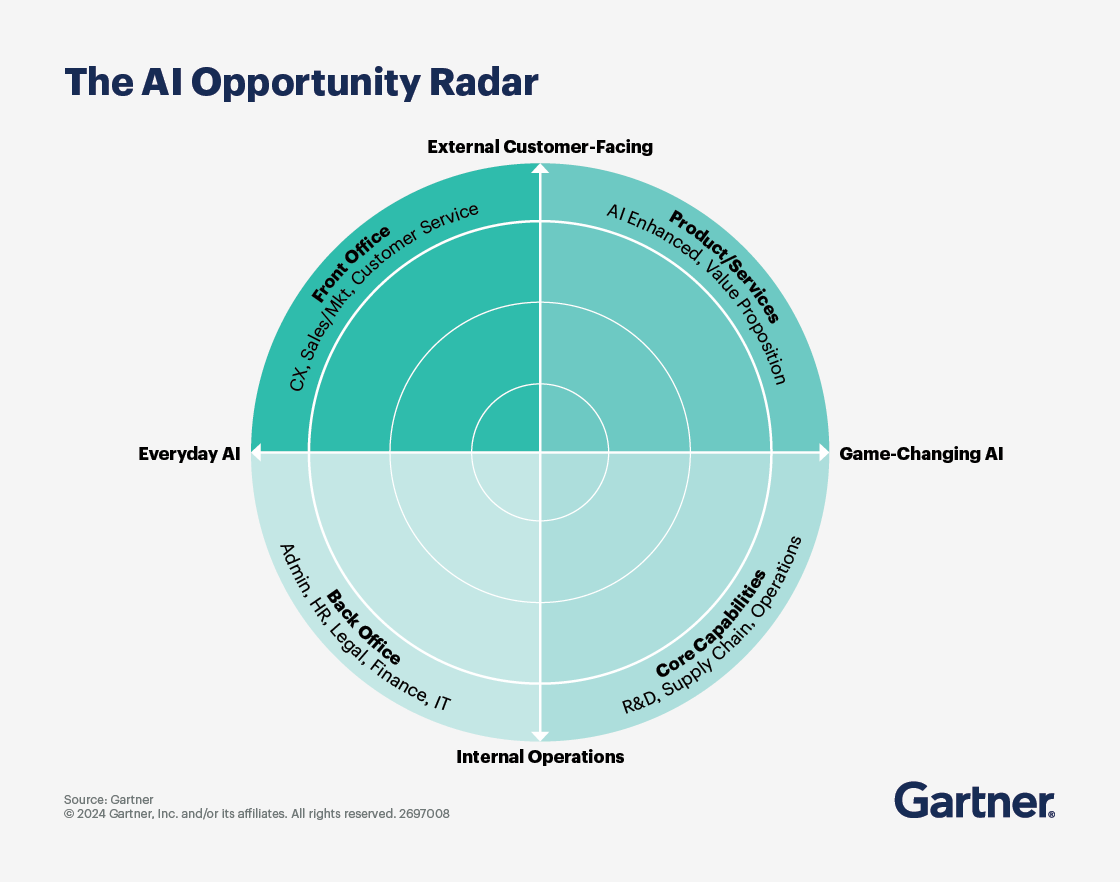
- AI opportunity ambitionThis reflects the type of business gains you hope to realize from AI. Opportunity ambition identifies where you will use AI (e.g., for internal operations or customer-facing activities) and how (e.g., to optimize everyday activities or create game-changing opportunities). Leverage the Gartner AI Opportunity Radar to map your opportunity ambition.
- AI deploymentThis reflects the technological options available for deploying AI, which can enable or limit the opportunities you hope to pursue. Organizations can deploy AI from public, off-the-shelf models trained on public data; leverage a public model and data adapted with your proprietary data; or build in house as a custom algorithm trained on your data. The more customization involved, the higher the investment cost and time to deployment — yet greater customization also enables game-changing opportunities.
- AI riskAI risk comes in many forms, including unreliable or opaque outputs, intellectual property risks, data privacy concerns and cyber threats. There are also emerging regulatory risks related to the rules and restrictions that different jurisdictions may place on AI, including those related to copyright. Your organization will need to define its risk appetite as it relates to degrees of automation and degrees of transparency.
Source: Gartner